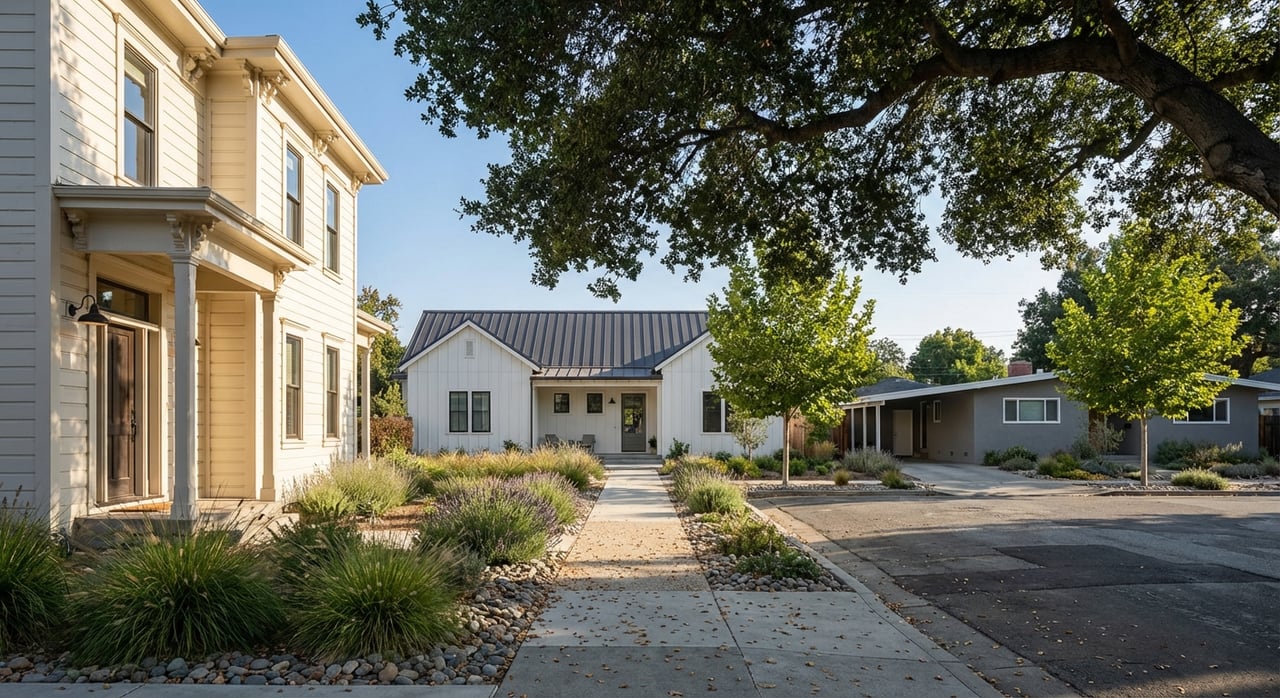
Love the look of a wide front porch, a brick storefront, or a red‑tile roof and wonder what it says about a home’s history? In Colusa County, architecture tells the story of farming communities, river towns, and civic pride going back to the 1850s. Whether you are buying, selling, or just curious, understanding local styles helps you spot value, plan maintenance, and market a property with confidence. This guide walks you through Colusa County’s hallmark home styles, where to see them, and what to consider before you make your next move. Let’s dive in.
Style timeline at a glance
- Mid‑1800s: Greek and Classical Revival shape courthouses and civic buildings as the county forms its government center.
- 1870–1910: Victorian varieties show up in residences and brick commercial blocks in the downtown core.
- 1905–1930: Craftsman and Bungalow homes spread through towns and ranch properties.
- 1920s–1930s: Mediterranean and Mission Revival influence schools and public landmarks.
- 1940s–1970s: Ranch, Minimal Traditional, and mid‑century infill appears across town neighborhoods and subdivisions.
Greek Revival civic anchors
Formal facades, symmetrical entries, and classical columns mark the county’s earliest civic statement pieces. The standout example is the Colusa County Courthouse on Market Street, built in 1861, a locally identified landmark in a Greek or Classical Revival form. You can learn more about its design and history from the state’s listing for the courthouse at the Office of Historic Preservation. The OHP record for the Colusa County Courthouse places it within the county’s early government era and highlights its architectural character.
Victorian homes and brick blocks
From the 1870s through the early 1900s, Colusa’s downtown gained brick commercial rows with decorative cornices, while nearby residences picked up Queen Anne and Italianate details like bay windows, brackets, and patterned shingles. A unique window into this era is Colusa’s historic Chinatown, where brick storefronts help define Main Street’s character. For a cultural and architectural snapshot, explore this overview of Colusa’s historic Chinatown corridor.
Craftsman and bungalow charm
Low‑sloped gables, generous porches with tapered columns, and exposed rafters make Craftsman and Bungalow homes easy to love. You will find them sprinkled across Colusa County’s small towns and in rural settings. The county’s ranching legacy includes estates that blend function and style, like Cecil Ranch near Grimes, where Bungalow and Colonial Revival motifs appear across a working complex. For context on notable local listings by era and style, browse the National Register’s Colusa County listings.
Mediterranean revival influences
Stucco walls, arched entries, and red‑clay tile roofs signal Mediterranean, Spanish, and Mission Revival designs that became popular in the 1920s and 1930s. In Colusa, these cues show up in institutional buildings, such as Colusa High School and Grounds, which carry Mediterranean Revival characteristics. You can see how these buildings fit into the county’s timeline within the National Register’s Colusa County listings.
Farmhouses and ranch properties
Across the valley, you will see vernacular farmhouses and multi‑building ranch complexes designed for work first, with simple gables, practical porches, wood or stucco siding, and a mix of barns and outbuildings. These properties often include accessory structures like silos, sheds, and worker housing. They read as complete environments, which can offer unique value and also require a more thorough look at systems and maintenance.
Postwar ranch and mid‑century homes
After World War II, Colusa County’s towns added Ranch and Minimal Traditional homes with single‑level plans, attached garages, and simpler detailing. You will find these in later infill and subdivisions that mirror trends seen across the country. For an overview of growth patterns and community character, the county’s planning pages provide helpful context in the Colusa County General Plan.
What style means for upkeep
Older homes are special, but style and age come with predictable maintenance themes. Use these highlights as a starting point, then pair them with professional inspections.
Lead paint rules for pre‑1978 homes
- Homes built before 1978 commonly contain lead‑based paint. Federal rules require disclosures and lead‑safe work practices for any renovation that disturbs painted surfaces in pre‑1978 homes or child‑occupied spaces. Get the essentials from the EPA’s guide to lead‑safe renovation and disclosure.
Asbestos in mid‑century materials
- Some mid‑20th‑century products, including certain flooring, pipe insulation, textured ceilings, and roofing, may contain asbestos. If materials are in good condition, they are often safest left undisturbed. If removal is needed, follow EPA and state protocols. Review the EPA and HUD reference on asbestos in homes and renovation.
Wiring, panels, and insurance
- Pre‑1950s homes may have knob‑and‑tube or cloth‑insulated wiring and limited amp panels, while some 1960s–1970s properties have aluminum branch wiring. These can be fire risks or complicate insurance and lending until corrected. Many buyers request electrical inspections. See a consumer overview of insurance considerations for older homes.
Moisture, masonry, and flood context
- Moisture is the top long‑term threat to wood and masonry, from porch decay to rising damp and corrosion. National Park Service resources emphasize diagnosing moisture sources and managing drainage and ventilation. Explore the NPS library of Preservation Briefs on moisture and materials. In river corridor areas near the Sacramento River and bypasses, confirm floodplain and levee context through the Colusa County General Plan and plan inspections around grading and drainage.
Termites and regional pest pressures
- Subterranean and drywood termites are active across the Central Valley. Reduce risk by managing moisture, limiting wood‑to‑soil contact, and maintaining ventilation. Learn practical measures in UC’s guide to termites and management options.
Historic windows, porches, and trim
- Original wood windows, porches, and decorative trim are character‑defining features. NPS guidance generally favors repair over replacement when feasible, which can preserve value and curb appeal. Discuss scope and costs with qualified contractors and align decisions with your long‑term plans, especially in prominent downtown areas.
Septic, wells, and rural systems
- Many rural homes rely on onsite wastewater systems and domestic wells. Before closing, request septic permits, pumping and inspection records, and well information. Start with the county’s Community Development pages for permits and environmental health programs at the Colusa County Community Development Department.
Where to see styles in Colusa
- Downtown Colusa: Market, Main, and Sixth streets show the civic core and classic brick storefronts. Look for the historic courthouse on Market Street and civic buildings near Sixth Street.
- Landmark list: The National Register page compiles local civic, school, religious, and ranch listings by address and era. Use the Colusa County listings as a map for your walking tour.
- Ranch examples: Properties like Cecil Ranch illustrate how Bungalow and Colonial Revival details appear in agricultural settings. You will find ranch complexes noted within the same National Register list.
- Towns beyond Colusa: Williams, Maxwell, Arbuckle, and Princeton feature early 20th‑century bungalows near older cores and later ranch homes in surrounding neighborhoods. The General Plan offers helpful community context.
Quick viewing checklist
- Identify style cues: roof shape, porch type, window configuration, and siding material often signal era and upkeep needs.
- Ask age‑related questions: lead paint, potential asbestos materials, and electrical system updates are common topics for pre‑1978 and mid‑century homes.
- Check moisture and drainage: look at grading, gutters, downspouts, and ventilation around crawlspaces and porches.
- Consider floodplain context: near river corridors, verify elevation, levee proximity, and insurance needs.
- For rural parcels: confirm septic permits, pumping history, and well status, plus recent termite reports.
Buying or selling a historic or character home in Colusa County benefits from local insight and a clear plan. If you want practical guidance on which updates add value, how to position your property’s style in the market, or where to focus due diligence, reach out to Amber W. Torres for a local consultation.
FAQs
How can I quickly date a Colusa home by its features?
- Look at roof form, porch style, and windows. Tall, symmetrical facades suggest Greek or Classical Revival civic buildings, asymmetry and decorative trim lean Victorian, low‑pitched gables with tapered porch columns signal Craftsman, and stucco with arches and red tile point to Mediterranean Revival.
Does buying near the Sacramento River affect insurance or upkeep?
- It can. Homes in or near floodplains may face specific insurance and drainage considerations. Review county floodplain context via planning documents and get an inspector’s opinion on grading, gutters, and site drainage.
What should I know about lead paint in pre‑1978 homes?
- Expect lead disclosure paperwork and lead‑safe practices if you renovate. Use certified contractors for projects that disturb painted surfaces and follow federal RRP rules summarized by the EPA.
Are original wood windows a problem when selling?
- Not necessarily. Properly maintained windows are a character asset. Many owners choose targeted repairs and weatherstripping over replacements, guided by NPS best practices, to balance comfort and preservation.
What inspections are smart for rural homes with acreage?
- Along with the general home inspection, order a septic inspection with pumping records, verify well performance, and request a recent termite report. Also ask about outbuildings, power to barns, and drainage patterns.
Which Colusa neighborhoods showcase multiple historic styles?
- Downtown Colusa around Market, Main, and Sixth streets offers a compact mix of civic landmarks and early commercial blocks, with nearby residential streets featuring Victorian and early 20th‑century homes.