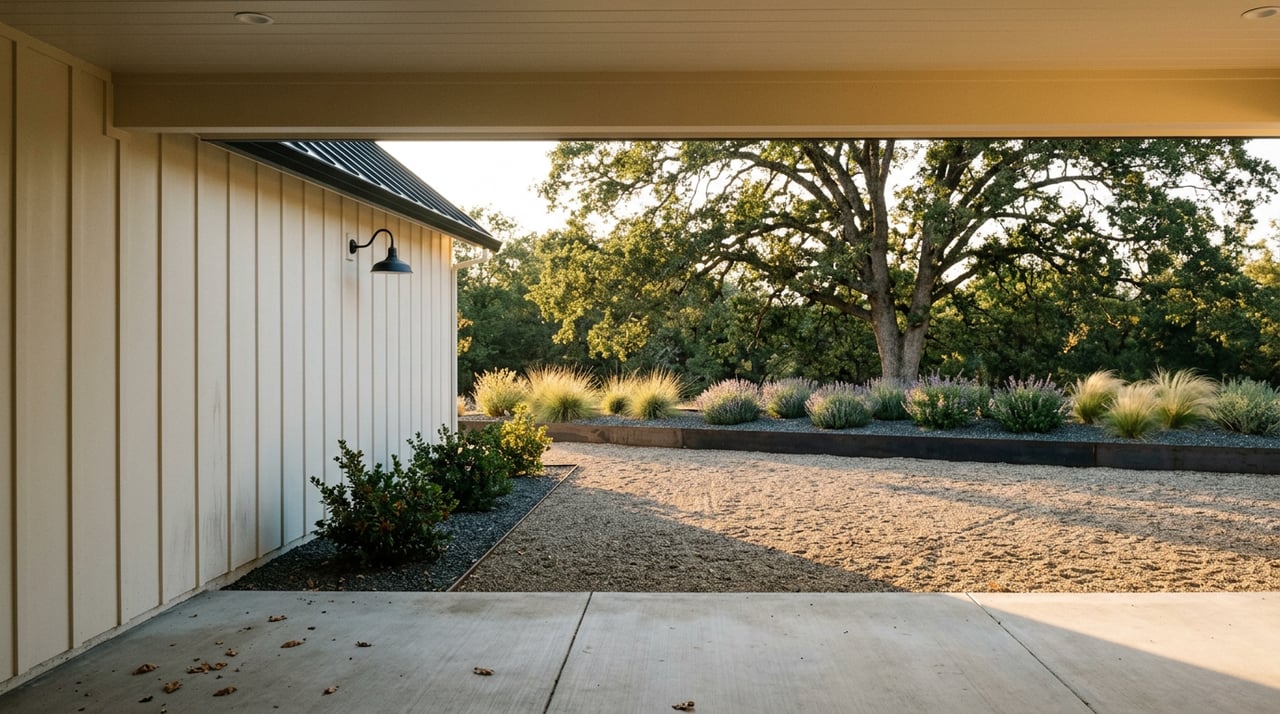
If you've lived here more than a season, you already know the calendar shift. The combines start moving before the geese do, but only just. By the time the last rice truck rolls out of a field off Highway 45, the first pintails are already dropping into the ponds a few miles south on Highway 20.
That overlap is the thesis of this post. Early fall in Colusa County is one landscape running two harvests at the same time, and the second one depends on the first.
The Handoff, In Plain Terms
Rice acreage across the Sacramento Valley works on a tight window. The medium grain rice grown by the Colusa Indian Community Council is planted during April and May, then harvested during September and October. Once the fields drain and the combines finish, the water gets rerouted. Some of it goes back through the Colusa Basin Drain. Some of it goes into managed wetlands a mile or two away.
That's where the second harvest begins.
Seasonal wetlands on the refuges are flooded from fall through spring, then dry from late spring through summer. When ponds are drawn down in the spring, seed-producing plants germinate and grow on the moist pond bottoms. The seeds and invertebrates these ponds produce become available to waterfowl and other wetland species when they are flooded in the fall.
Read that again. The refuges spend the summer growing food the same way the neighboring farms do. The birds show up to a set table.
The Arrival Calendar Nobody Prints On The Fridge
Most folks around here associate the refuge with the winter spectacle. Fair enough. Colusa NWR regularly supports peak wintering populations of over 150,000 ducks and 60,000 geese, with thousands of waterfowl present from September through March, and peak populations in December and January. Those December numbers are the postcard shot.
The early-fall version is quieter and, in some ways, more interesting because you can actually pick individual species out of the sky.
| When | What's arriving | Where the noise is |
|---|---|---|
| Mid-August | First northern pintails | Observation deck, one mile southwest of town |
| September | Greater white-fronted geese, shorebird flocks pushing south | Auto tour route, back ponds |
| October | Snow geese and Ross's geese, full fall migration underway | Everywhere at once |
| November–December | Green-winged teal, wigeon, shovelers, coot | Peak counts across the Complex |
That table is compressed from the U.S. Fish and Wildlife Service's own species notes. Flocks of shorebirds pass through in August and September as the water begins to flow back into the wetlands. Northern pintail are the first ducks to arrive, as early as mid-August, and signal the beginning of fall migration. White-fronted geese follow in September, and white geese, Snow and Ross's, begin to appear in October as fall migration kicks into full swing.
If you've only been in November and later, an August or September visit is a different experience. The birds are there. The crowds aren't.
Where To Actually Go
The refuge address gets people lost, so here's the version that works. From Sacramento head north on I-5, take exit 578 at Highway 20 in Williams, drive 6.7 miles east, then turn right onto O Hair Road and continue to the parking and visitor area at 2180 State Highway 20. The auto tour is about three miles. Entrance passes are not currently required for admission into the Visitor Use Areas of Colusa NWR.
Bring the good binoculars. Just past the parking area and accessible restrooms is a large, low observation deck which, due to its proximity to the edge of the water, provides access to waterfowl surprisingly close. This is a hotspot for birders and photographers alike.
Two practical notes for August and early September specifically:
- The walking loop is open, but signs warn about ticks and mosquitoes. Long sleeves, long pants, and repellent are not optional in the first weeks of fall.
- As of the refuge's late-May 2026 update, the Packer Unit Boat Launch on the neighboring Sacramento River NWR was closed due to a downed tree, though all other refuges and refuge units are open. Worth checking the FWS site before you plan a river-side detour.
The Rice Side Of The Same Coin
While the wetlands fill, the fields empty. This is the working half of the season and it moves fast.
The scale is genuinely hard to picture until you drive it. Rice is one of the major crops grown in the Sacramento Valley of California, with approximately 500,000 acres planted yearly. Colusa County is the top producer in that valley. On a typical drive down Highway 45 in late September, you'll pass fields being cut, fields being drained, and fields already going gold-brown as stubble gets ready for its winter role as bird habitat.
The Colusa Indian Community Council's own operation is a useful anchor for the numbers. The tribe produces an average crop between 220,000 and 245,000 cwt sacks per year of U.S. No. 1 medium grain Japanica rice, then transports it to a rice dryer in Maxwell built in 2001 that dries and stores 1,000,000 cwt sacks of medium grain rice. If you've ever wondered why the trucks are heavier on I-5 through Maxwell in October, that's why.
Farmers' Rice Cooperative gives another slice of the same picture. The co-op has over 500 grower-owners cultivating a quarter of California's rice, all from the Sacramento Valley. A share of those growers are Colusa County families going back generations, including Jeff and Brenda Miller, fourth-generation farmers in Colusa County whose family legacy dates back generations. The point isn't the biography. The point is that the machinery you're stuck behind on Bridge Street in October is often being driven by the same last name that was on the field forty years ago.
A Weekend That Uses Both
Here's how I'd actually spend a Saturday in mid-September if I lived here and wanted to remember why I do.
Early. Coffee before six. Head to O Hair Road and be on the observation deck at first light. The pintails and the first white-fronted geese will already be talking to each other. Bring a jacket. The valley cools off overnight even when the afternoon is going to hit ninety.
Mid-morning. Drive the auto tour slow. The refuge's guidance is straightforward on why: the three-mile car loop takes you within a couple of feet of the ponds, but the birds are a bit skittish, so you must drive very slow and be as quiet as possible. If there's a raptor working the edge, sit still and wait. The flush is worth it.
Late morning. Head back through town. The rice trucks will be running by now.
Lunch. Downriver from downtown. Slough House Social at 3249 Butte Slough Road has a river view, indoor seating or two riverside patios, and sits just one mile downstream from downtown. It's the right kind of place for a long shoulder-season lunch, and the patios are usable well into October most years. Note the Tuesday closure if you're planning midweek.
Afternoon. If the light is holding, loop back past the fields on any of the smaller county roads. This is the one time of year when the working landscape and the wild one are doing visibly related things at the same time.
What The Season Is Not
A quick word to set expectations, because a lot of the Colusa NWR content online defaults to the winter spectacle and skips this window entirely.
Late August through early October is not the sky-darkening-with-snow-geese moment. That's later. What it is:
- The quietest six weeks of the year at the refuge, with the earliest arrivals already visible.
- The busiest six weeks of the year on the rice side, with harvest logistics visible from almost any county road.
- The last stretch of usable outdoor patio weather along the river before the fog starts settling in on November mornings.
If you've been telling yourself for three years that you should finally drive the auto tour, this is the shoulder to do it. You won't fight for a parking spot. The birds that are here are here to feed, not to move on.
A Note From Amber
I write a lot about Colusa County properties, and the honest reason I stay based here is on the calendar above. The season most places call "shoulder" is the one this county does best. If you're a resident thinking about what your acreage or your in-town lot is worth heading into a new year, or you're simply curious what the market has been doing while you were busy with harvest, reach out to Amber W. Torres. Request Your Free Home Valuation whenever the timing suits you. The birds will still be here.